

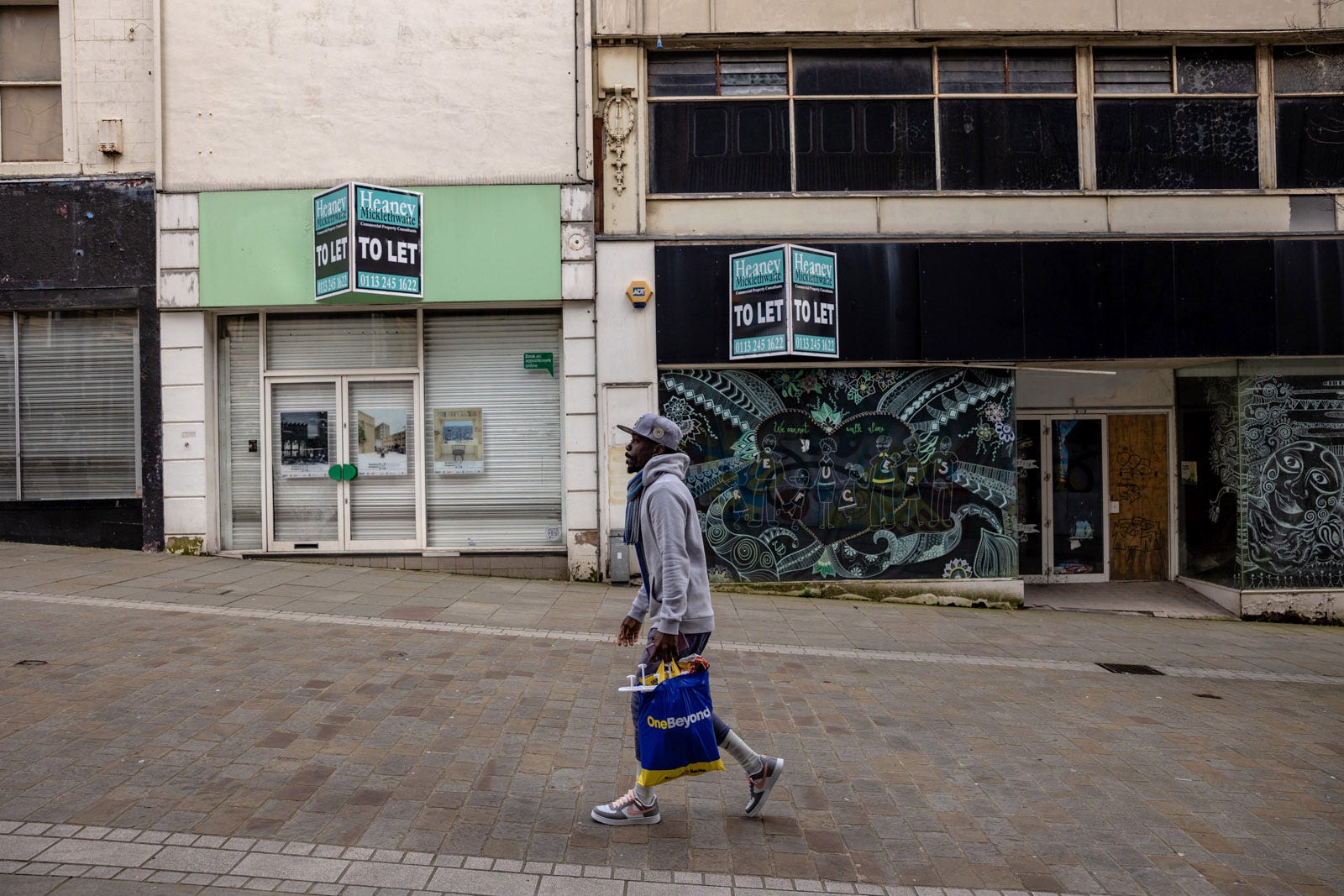
I saw a tweet the other day that said the UK is slowly becoming like Communist Cuba.
Wage compression is a serious issue in the UK. For many decades, Cuba operated under a strictly egalitarian wage system where most government employees earned roughly the same amount regardless of their profession or performance. Full time minimum wage for a 40-hour week is now £26,400 a year. For comparison, a band 5 hospital nurse earns £32,073 and a newly qualified teacher earns £32,916.
The effects of this wage compression is further exacerbated by punitive taxes imposed by the state, where anything earned after £50,270 is taxed at almost 50% when you take into account NI and Student Loan. You have a bizarre scenario where someone earning minimum wage in Carlisle or Aberdeen has similar levels of disposable income to someone earning a top 20% salary in London.
We are starting to see the cracks of this broken system with NHS Doctors striking over pay. In real-terms their pay and standard of living has been decimated. I do wonder whether many are starting to question whether it's still worth becoming a professional in the UK, given how warped the incentive structures have become.
Of itself this is an alarming phenomenon (even if the numbers are a but off) but it’s symptomatic of a broader economic crunch on the horizon. One tweeter succinctly outlines the problem. There are two economies in this country now. One is people with no debt, assets outside the system, and portable skills. They’ll be fine. Uncomfortable maybe, but fine. The other is people with mortgages, car finance, student debt, a workplace pension they don’t understand, and a salary that hasn’t kept pace with inflation for fifteen years. That second group is the majority. And they have almost no buffer for what’s coming.
Another tweeter puts more meat on the bones.
No one is prepared for how materially poorer the UK is likely to become over the next two decades. A disproportionate share of British wealth is concentrated in housing. Over 40% of total household wealth, approaching £4 trillion, is tied up in residential property.
For the past 30 years that seemingly worked very well. Housing absorbed a significant share of monetary premium in an environment defined by falling interest rates, expanding credit and persistent monetary easing.
It ceased to function purely as shelter and instead became leveraged money and a store of value. The UK faces a combination of headwinds that means this is going to change. An ageing population, low birth rates, slowing population growth and increasing capital outflows as high net-worth individuals relocate to more favourable jurisdictions in the Middle East and Asia.
At the same time, housing is no longer the only recipient of excess liquidity. The global choice for storing value has expanded and alternative monetary assets, such as Bitcoin, are beginning to compete for that premium.
The UK has mistaken housing inflation for wealth creation for three decades. What follows is unlikely to be a sudden collapse but a slow erosion of real value concealed by nominal stability. A large portion of British wealth is far more fragile than widely understood.
The entire UK economic model became dependent on rising house prices as a substitute for actual productivity growth. And we stupidly, fully embraced it as a nation. Houses going up made people feel richer, so they spent more, which generated tax revenue, which has funded public services. Now that we strip that away, you don’t just have poorer homeowners. You have a fiscal crisis because the wealth effect was propping up consumption and therefore the tax base.
As Josh Hunt puts it, “And yet the entire political conversation is still built around the assumption that growth will return, that house prices will recover, that the next budget will fix it, that someone somewhere has a plan. Nobody has a plan. Because the honest plan would require admitting that we can’t afford what we’ve promised, that the model is broken, and that the adjustment is going to hurt regardless of who’s in charge”.
This is the misplaced optimism upon which far too much rests, not least narcissistic delusions such as Net Zero. Meanwhile, entitlement is destroying the UK. Entitlement of nimbys, triple locked pensioners, tax avoiding rich, welfare fraudsters, corporations rigging the regulatory system, militant unions.
This is at a time when the labour market, the energy system, the housing market and higher education are founded almost entirely on faulty assumption of perpetual growth. There is also a pensions and senior adult care timebomb. OBR data shows UK welfare spending now at £333bn, exceeding income tax revenue of £331bn for 2025-26, the first time this has ever happened.
This is all against a backdrop of an institutionally paralysed government. My X feed lately is just a stream of serious and dangerous problems that the government is either exacerbating or simply doing nothing about.
With a little additional effort I could throw a few more grenades in to make the overall picture bleaker, but you don’t need me to tell you that we are in very serious trouble. You don’t need to be an economist. You can feel it in your bones. No first world country could sustain the sort of perpetual incompetence we’ve endured without running up a massive debt to the future.
Of course, none of this is new. I could have written this article a decade ago (and if I sift through my old blog, I probably did). It’s always just been a question of when the hammer will fall.
The catalyst, it seems, is Donald Trump. His war in Iran, unfolding concurrently with the war in Ukraine, is trashing half the world’s energy infrastructure. Consequently, the price of everything is going up, then going up some more. Even if there were a ceasefire tomorrow, nothing is going back to normal. This is the tipping point.
Though it might not feel like it, it seems Donald Trump has done Britain a huge favour. The ultimate consequence of his actions in Iran is to expose the fragility of Britain’s Ponzi economy. We’ve been kicking the can down the road for thirty years but now we’ve run out of road. The big collapse I always assumed was coming is right around the corner, and there’s no way out unless we let go of our delusions. We cannot afford Net Zero. We cannot afford our lavish welfare state. We cannot afford our entitlement culture. We cannot afford to keep asset-stripping our defences. Essentially, we are being forced by circumstances to make all the decisions we’ve deferred.
The only question now is how long it takes for difficult times to become dangerous times. We’re fast approaching a crunch point where it simply isn’t possible to meet all the demands on a paycheque. With no disposable income it is no longer possible to sustain the vast services industries, much of which turns on otherwise unemployable third world immigrants. With social cohesion already collapsing, a bad situation is only going to get worse. This is the point where managed decline become unmanaged. No-one is in control of what comes next.
This fits full square with my view that we live in the sixth and final stage of nations decline as described by Sir John 'Pasha' Glubb in his 1975 essay 'The Fate of Empires'
The final stage he called 'The Age of Decadence' typified by economic decline, frivolity, huge increases in welfare and immigration and basically all that you see around you and overseen by abysmal low grade leadership.
Things WILL get worse before they get better and we need a mass movement in support of these reforms to prevent our politicians ever again ruining our country.
our politicians should be our servants and not our masters.
https://harrogateagenda.org.uk/
Actually, it's worse than Communist China - at least they know how to build things. We've been paying them for the last 30 years to make stuff that we could make stuff cheaper than we could have made, so destroying our own industry. And now we don't have steel or cement.
And then importing cheap labour from around the World, except they don't want to work once they are here and getting free stuff themselves. The worse is yet to come.