

Over the course of few posts recently, I’ve outlined the fragility of the “bonfire of quangos” theme on the right, suggesting instead that welfare reform is the place to look for substantial savings, but also taking a hard look at statutory obligations. It is necessary to restore proper accountability.
I’d been meaning to do some deeper dives on this phenomenon but thankfully I don’t have to thanks a very good report on the subject from the Tax Payer’s Alliance. Just for a bit of context, the report notes that in 2025-26, the average share of budgeted local authority spending committed to adult social care and children’s services was 47 per cent, a 57 per cent increase from 2015-16.
The authors outline how local authorities are driven to bankruptcy to maintain statutory obligations in SEND and adult social care. As much as it’s bad for public finances, it’s bad for democracy…
Beyond the practical problems, the current settlement raises political and constitutional concerns. Shifting responsibility for substantial areas of national welfare spending to local government makes it harder for voters to identify who is accountable for public spending decisions. Successive governments have positioned councils as delivery agents for nationally determined services, but public understanding of council finance has not kept pace with this change.
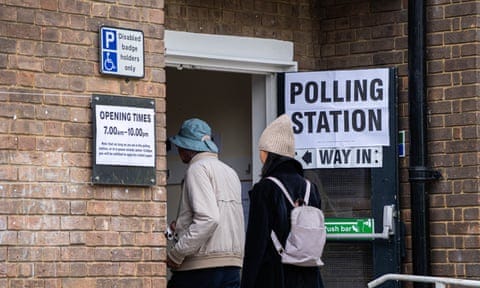
The effect is most visible at the local authority level. For many residents, especially those not benefiting from high-cost acute services, the salient facts are rising council tax bills alongside deteriorating neighbourhood services such as road maintenance and waste collection. Local elections then appear unresponsive, for even when voters change the party in control, the incoming administration faces the same statutory constraints and has limited scope to reallocate resources to local priorities.
This is part of the reason (a big part) why so many branches of local authority activity have been cut to the bone, including the type of local authority enforcement that’s essential to detecting and dealing with illegal immigration and its symptoms. As such, if the ambition is to sort out immigrant, restore local democracy and balance the books, addressing statutory obligations is the first port of call.
Essentially, what we’re talking about is proper devolution. By that, I do not mean the creation of regional development agencies with elected mayors as per the current model, but a genuine devolution of power to local authorities so that they may determine their own spending priorities, thereby repairing local democracy in the process. That, though, also entails a related debate about what we can realistically demand of the welfare system. As the TPA notes…
There is no straightforward structural remedy for welfare commitments that are growing faster than the revenues assigned to fund them. As the IFS notes, the mechanics and policy options on areas like social care are well-known; what has been lacking is the political willingness to choose between them and accept the trade-offs those choices entail. Existing arrangements that diffuse responsibility and defer decisions should not be maintained, as they shift costs onto taxpayers and society both now and in the future, while increasing the risk of a more disruptive adjustment later.
A clearer organising principle would align authority with liability: at all levels, the tier of government that funds a policy should also set it, and vice versa. This would not preclude administrative devolution, the government could still commission councils to deliver services where that is efficient, including parts of the welfare state, but it would require the UK Parliament to internalise the fiscal implication of the national entitlements it chooses and prevent the routine externalisation of costs to local budgets.
Reforming the state on these lines would break the ‘statutory straitjacket’ on local authorities in one of two ways. Either the government would fully assume financial responsibility for policy areas it controls such as SEND and social care and bring those liabilities onto HM Treasury’s balance sheet, or it would devolve meaningful latitude alongside the liability to councils, allowing local authorities to adopt policies which better match their means and the political priorities of their electors.
It should also be noted that there are similar obligations on local government on transport matters, and virtually everything local government does has a climate dimension, which requires the termination of arbitrary targets and climate related planning stipulations. The clear rule in all this is that the tier of government that sets a policy should also fund it. Just this one change in mindset might be enough to liberate all levels of government so that they may focus on what they should be doing.
Getting our current PTB to accommodate, let alone agree to this is like voting fat, overfed turkeys to vote for Christmas. They won't do it. It may well take more than an election.
Unfortunately much of the demos is largely now so dumbed-down and/or foreign or fed up with the whole parliamentary system, that it is going to take a big societal shake up to achieve. On present performance, the squabbling between the egos of leaders of various groups turns people off and doesn't help us achieve what we otherwise might. Why can't they see that?
Excellent article and very thought provoking. Maybe we need a modern day Boston Tea Party style revolt from local government at the sharp end to get this properly funded and sorted? I have to admit the cost of social care being taken off balance sheet for the government had escaped me. When you think it’s pushing 100% without this, public sector pensions and PFI commitments were really closer to 200% our borrowing costs are really only going one way.