

One of the problems with the Slop Right’s fantasy bonfire of quangos policy is that Labour is already doing it. It’s just not making headlines. But as I’ve noted in previous articles, 90% of the funding goes on the top ten enterprises, while most other bodies are small advisory panels, niche committees and special purpose public-private vehicles with virtually no overheads.
As such, the bonfire of quangos is just a tidying up exercise, clearing out some of the redundant and duplicate enterprises. The problem is, it doesn’t save much money. There will be some mergers in the near future, though. From 1 April 2026, the Valuation Office Agency (VOA) (the small executive agency that handles council tax and business rates valuations) is being fully integrated into HMRC. This is meant to increase ministerial oversight and save 5–10% on admin costs (a mere 2.7m) - but the HMRC is taking on an additional 5,000 compliance officers as part of a separate £1.5 billion tax-gap-closing drive.
The question, then, is whether those compliance officers are necessary and whether they could be eliminated with a tax simplification policy as opposed to more top-down reorganisations.
This is all part of a process that’s been going on since 2024. Ideas of fully merging the Environment Agency and Natural England were considered (and discussed in parliamentary sessions) but were explicitly rejected by officials as too disruptive and a potential distraction from delivery - and when you look at what they do, I can see their point. You could cut back on the Environment Agency by returning some of its functions to local authorities, but you would have to increase local authority staffing and ring-fence the money. Natural England could certainly use a purge of climate dogma, but again that’s a policy question rather than accountancy.
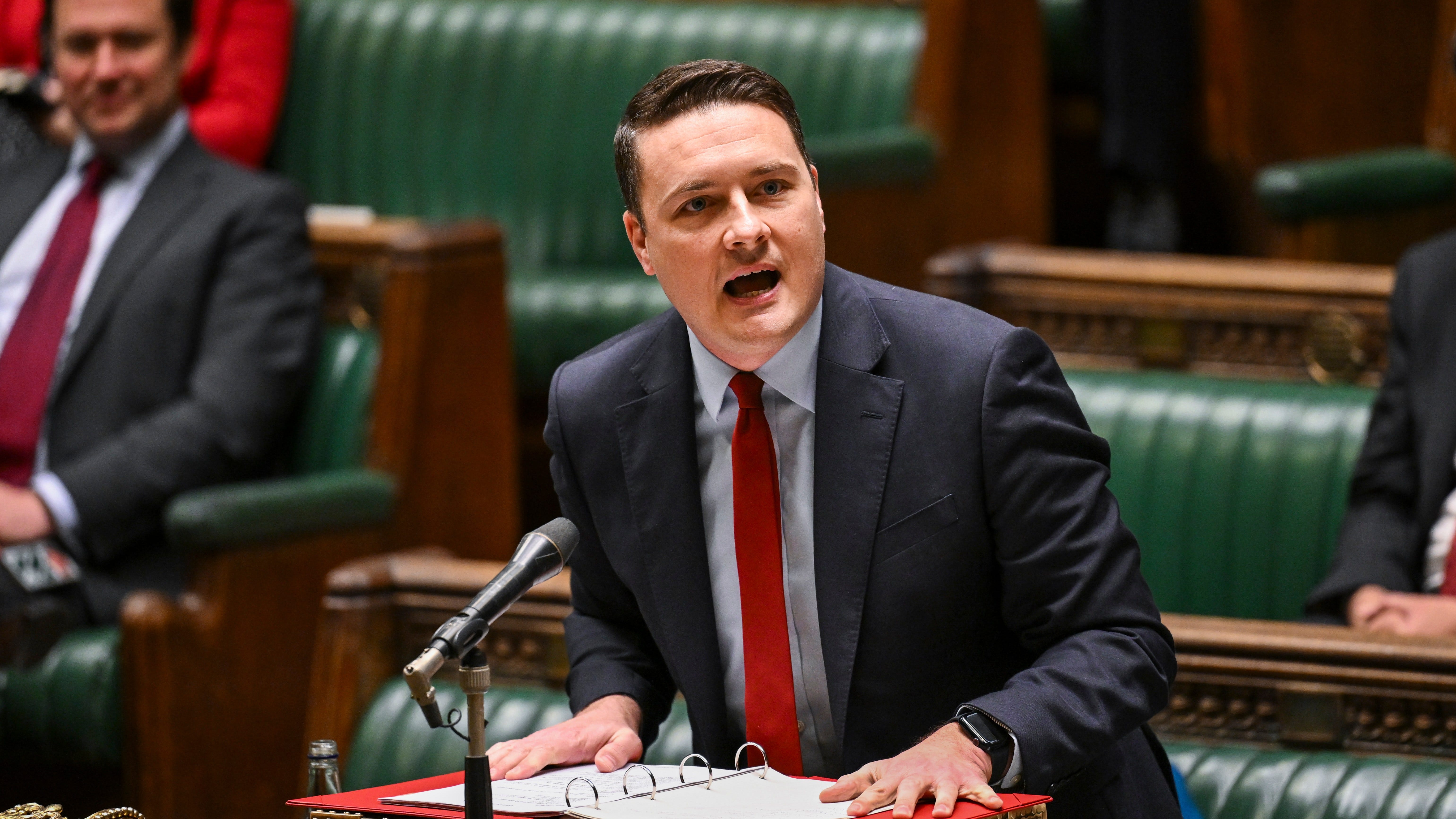
The big one from this review process is Wes Streeting’s abolition of NHS England - merging it into the Department of Health and Social Care. Labour hopes to shed 21,000 jobs in total, shaving £1bn off the payroll bill annually, but it's expected to cost £860m in voluntary redundancies. Some internal estimates put the full bill at £1–1.3 billion.
Whether or not this makes a meaningful difference remains to be seen. The emphasis for cuts usually lands on back office staff which has consequences of its own in terms of service delivery and a future government may be forced to restore some of the administrative capacity.
The big one that the slop right usually fixates on is the Department for Culture, Media and Sport. DCMS sponsors 41 arm’s-length bodies (the official figure confirmed in the department’s own Monitoring and Evaluation Strategy 2026–2031, published December 2025). This is one of the largest portfolios in Whitehall and includes highly visible cultural, heritage, sport and media organisations (Arts Council England, Historic England, Sport England, British Library, national museums, Ofcom, Gambling Commission, VisitBritain, etc.).
DCMS does seem to be the dumping ground for all the oddballs but they tend to be small and inconsequential. They tend to come into the crosshairs of the slop right because some are part of the left wing cultural establishment. There are savings to be made but it’s not going to be in the billions. The BBC is about half of the DCMS budget but the future of the BBC is a whole other policy conversation. £1.4bn in spending (19% of the budget) is National Lottery grants - which needs closer supervision, but it’s not tax payer’s money as such. That leaves you cutting Arts, Culture & Libraries. Good luck with that.
By my reckoning at least seven British Prime Ministers (or those who became PM) have pledged or been directly associated with a “bonfire of the quangos” and it never happens. They each discover in turn that running an advanced, first world state is complicated and expensive, and the idea that there are hundreds of wasteful and useless quangos is a piece of right-wing mythology.
I concede that there’s two or three billion to be shaved off the bill but if the plan is to save tens of billions then it’s not the place to look. There is certainly a political imperative to review the missions of these organisations and decontaminate their culture, and levels of political oversight, but that (again) is a different conversation. A bonfire of quangos is not going to free up billions for tax cuts.
The place to look for major savings is welfare reform - but that’s not easy either - especially in these times. Our poverty problems are downstream of our energy problems, which is going to take at least a decade to fix.
The danger for any party of the right banging on about a bonfire of quangos, is that it looks a lot like more Tory austerity, resulting in cuts to frontline services when they find the savings of cutting bureaucracy simply aren’t there. Labour is already having this problem in attempting to streamline the MoJ. The court backlog is one of the reasons they want to scrap jury trials. From a bureaucrat’s perspective they are horribly expensive and inefficient, and they can’t see where else to make the cuts. It’s also problematic for the right in that many of the problems they want to fix, particularly surrounding immigration, necessarily require a larger civil service headcount.
As such, the proverbial “bonfire of quangos” trope is fast becoming the most reliable indicator of a slop merchant in action. It tells us that the Slop Right has a threadbare grasp of the British state and makes no real effort to find out what needs fixing or how. That’s why they do not deserve our attention, or our votes.
I suppose another angle would be to ask the question: What does this quango COST people?
In other words, not so much about the budgets they have (paid via taxpayers), but as they do their roles, what else is it costing people or businesses affected by it.
HMRC would probably need to be exempt (apart from vast simplifications) - as its role is literally to cost people money!
But as you said, most of this will come down to politics and policy. Another example is Ofcom. All I see is it interfering with American companies, thinking it has any jurisdiction at all, re the Online Safety Act.
My sense is that it is automatically, then, not fit for purpose. Sack everyone and shutter it.
But a look at its functions shows vastly more important things it could be spending its time on, rather than trivial nonsense it shouldn't even get a say in (eg online 'safety'):
- TV/radio broadcasting regs
- Telecoms & Internet oversight (eg clear pricing, fair customer treatment, etc)
- Postal services regs
- Radio spectrum management
- Consumer protection
- Market competition and enforcement (THIS should be the major one, breaking up monopolies)
Looking beyond the bonfire of quangos slop the two areas for cuts are Welfare and all Net Zero policies but who has the guts and knowledge to tackle these?