

I struggle to think of any X accounts I couldn’t live without, but if I had to pick a top five list, Steve Loftus would be one of them, and not just because he wrote this today…
I don't think Reform will win in 2029 any more, I think they will self implode well before then, and if not the pressure and focus of a campaign will do it. But if they do, this is what will happen.
325+ MPs. 315+ of them brand new. A Government requiring 120 people to run it and 110 of them can't find a bathroom never mind have the first clue how anything should be done. The Minister for Housing will be a guy that ran an estate agents the week before.
Most of them will be poorly vetted, those that haven't already been outed in the campaign for fraud, corruption, racist tweets etc will now be found out in Government. There will be turmoil, pressure and calamity like Farage has never seen.
Support is based on enthusiasm for change, but it's factional and shallow, once it becomes clear that it's a shit show there will be mass defections, more than half their MPs will likely be former Tory councillors or MPs. Those the Tories don't want back will go Indy just to disassociate themselves from the debacle.
Every day the papers will be full of Reform drama. Policy failures, in fighting, defections, leaks, scandals etc. Polling will drop from low 30's which just got them the win to mid teens within months.
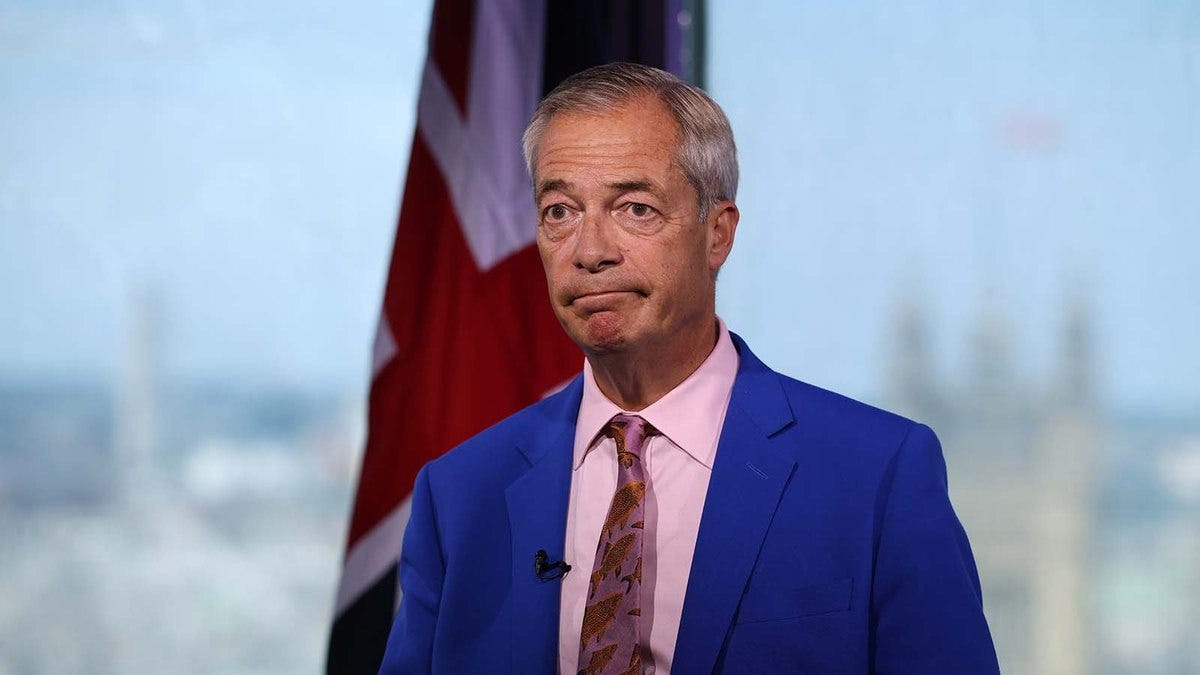
Farage, a man whose ego relies on being the popular insurgent will hate being the failed incumbent and unable to handle it.
Donations will dry up. Those "big hitters" from the private sector they plan to help run departments will head for the hills as if a tsunami is coming, if they even get on board in the first place.
It will be chaos and disaster the likes of which have never been seen before. It will make the last 2 Governments look like nirvana.
It will end with him resigning, or them losing a majority, likely both. And he will blame the civil service and institutional bias for his failings.
The replies to his thread are similarly realistic. He further remarks that “It will get worse when the media and public really start paying attention in a GE campaign. Tactical voting will also play a bigger part then ever before, with the visceral dislike many have for Farage making them vote for whoever can keep Reform out”.
Of course, nothing said here is anything new to readers of this blog. All of Reform’s woes stem from its structural defects which are all a product of Farage’s failings as a leader, and as a man.
This latest donor debacle, and Farage’s misfiring by-election stunt, is not doing the party any good. Reform’s future is now exclusively tied up in how awful the Burnham administration is, but that alone does not make Reform fit to govern. Of all the parties on the right, the Tories look like the more serious proposition, and I wouldn’t be surprised if that now starts showing in the polls.
This also has ramifications for Restore Britain. Restore is proving adept at social media engagement farming, but it’s now conclusively proven that popularity in a small corner of X and pandering to American audiences does not translate into polling success. Moreover, Restore supporters should be aware that Restore has all the same conceptual and structural defects. The party is built around a figurehead rather than an ideology, and while the party attempts policy, they are going through the motions without understanding what they’re doing and why.
For Restore, the little policy development they’re doing is little more than a tick box exercise. It doesn’t inform their communications and it doesn’t shape their strategy. It brings back recollections of Arron Banks’s dismal Leave.EU campaign which had no intellectual underpinnings and its social media output was chaotic and often crass. I doubt the millions spend on Banks’s vanity project made the slightest impact on the referendum result.
A structured approach would involve settling on a specific ideology and reinforcing it with policy, while at the same time developing a strong team of like-minded spokesmen who know their own system of thought inside out. That is what builds resilience to media scrutiny. Expertise brings credibility and is insulation against the kind of embarrassment we saw yesterday.
Reform routinely demonstrate that you can only get so far on populist vibes. At some point you have to look like you’re a government in waiting, and only serious policy can do that. Badenoch seems to understand this, even if her eventual policies will be the wrong solutions to yesterday’s problems.
A lot of my insight comes from having engaged in the process. I‘ve spent the week doing some extensive upgrades to polices on the Manifesto Project. I’m pleased with the way it’s turned out. I really do enjoy the process because I have to cover so many subjects and go deeper than I’ve ever been before, so it’s a massive learning opportunity that expands my horizons.
With it being over a year since I originally wrote policies for it, I’ve had my eye on a number of subject areas, keeping an eye on developments, to discover a lot of things I originally wrote were superficial or conceptually flawed, illustrating that policy development is a process, and if parties are only just starting up then they’ve probably left it too late, even if they have access to expertise that I don’t.
The rookie mistake is setting about policy form a year zero perspective without regard to current government policy and direction of travel. No government has the luxury of starting from scratch. For instance, if I were starting defence policy from scratch, I would probably scrap GCAP as an already obsolete concept, but we are past the point of no return with that, so you have to build policy around what you’ll be working with when you get to power. Same goes for the navy. The QE carriers are a fact of life.
The other problem I encountered was recycling policies I wrote for the Homeland Party. I wrote them from an explicitly nationalist perspective, even though they went counter to my free market instincts, particularly on the NHS and housing. Defence was another area with ideological conflicts.
This, incidentally, is why Restore Britain is going to have yet more problems with its nationalist supporters. Even if it is successful in driving away the worst of the neo-nazi headbangers, doctrinal nationalism still has major conflicts with the Brexity boomerism of Lowe.
Here, I note that Restore has taken on Henty Bolton as a national security advisor. I don’t know precisely what is worldview is but he will likely understand that defence policy is downstream of foreign policy, and where the party sees itself in the international order. This matters because doctrinal nationalists are profoundly anti-NATO (they regard it as Zionist captured) and on that score have a lot in common with the far left. Your position on NATO is fairly fundamental when it comes to defence policy, especially procurement.
Similarly, nationalists are ethno-collectivists and have very socialist ideas about housing. Personally, I think the very idea of social housing is offensive. There is never going to be a fair way of deciding who gets subsidised housing, especially when it is rationed. It will always create a soul crushing race to the bottom and create welfare dependency enclaves. The excessive demand for council housing is symptomatic of a broader market failure, which is not remedied by building more social housing.
As such, the more Restore seeks to keep the nationalists in the tent, the more friction there is likely to be over fundamental areas of policy, and the more compromises it makes, the less coherent it is. This is why a party has to set out a definition from the outset and build its policy platform accordingly. If people disagree with it, they have to go elsewhere. Ultimately, the definition has to align with the politics of the leader. You can’t be all things to all people. Politics is the art of persuasion, bringing people to your way of thinking.
Having made a number of policy improvements to the Manifesto Project, I’m fairly satisfied with the shape it’s in now. There’s a balance to be struck between detail and verbosity and I think I’ve got it about right, but the important thing is to never consider the process complete. Every policy areas is evolving at lightning pace. Policing, justice and health policy rapidly falls out of date, especially if it is not written with existing developments in mind. This is where Restore’s police policy is weak. It made no reference to the Home Office’s own white paper.
While Restore is at least making an attempt at policy, which is more than you can say for Reform, it is, on the whole, amateur hour stuff. You soon learn there is an art to it, and there is no substitute for having a structured methodology and a set of foundational principles - which Restore does not have. Developing policy in silos rather is a big part of why manifestos end up pulling in different directions. Ultimately, manifestos exist as the basis of your to do list when you reach power. If you haven’t done the thinking, you chances of succeeding in office are minimal. This is a big part of why Brexit turned out to be such a monumental wasted opportunity.
Where I find I’m much more sympathetic to the right as a whole is that they are always going to struggle for serious people because serious people are in short supply generally, and they tend to be smart enough to give politics a hard swerve. Frankly, you have to question the judgement of anyone who devotes most of their runtime to politics. The sacrifice to reward ratio is not great. Part of the job for any emergent party is to identify and nurture new talent - which is not easy. This is something the right consistently fails to do. We’re still laundering the same old faces.
As such, it doesn’t look like there’s a lot of mileage in the dissident right. Both Restore and Reform are contingent on their figureheads, both a single point of failure, each carrying major liabilities of their own. If there is one thing Lowe and Farage have in common it’s their casual attitude to details. Lowe wouldn’t hold up much better under the same scrutiny, nor will Restore’s finances. Neither party can withstand the departure of their leaders.
All of this bodes well for the Tories, especially now that Badenoch is determined to part company with the failed ideas that saw then so badly mauled in 2024. She has rejected former Conservative MPs as candidates for her party at the next election because they support net zero. That, I suppose, is progress but her party is still comprised of the same deadbeats who unleashed the Boriswave, not least her shadow foreign secretary.
Meanwhile, Badenoch’s forays into policy have not yielded impressive results. She is imposing the same kind of discipline on her party when it comes to ECHR withdrawal which will prove to be a slow-motion car crash. Similarly, her policy commission on social cohesion and integration, which reports back in time for conference season, is likely to be a serious of half-measures better suited to 2006 than 2026. Reversing the Boriswave and bringing Islamic sectarianism under control is going to require policies which are too rich for the blood of most Tories. There is still no basis to trust the party, nor can we escape the fact that most of what ails the country is a direct consequence of fourteen years of Tory rule.
With the party options being so unappealing, I now advise, nay implore, people to vote locally with greater care. It’s not use complaining about the calibre of politicians when people vote for brands over candidates. You cannot delegate the quality vetting process to the parties themselves. You have to decide for yourself who is up to the job. On that basis, I probably will vote the the incumbent Tory over a political novice from the dissident right.
While I maintain my view that we aren’t voting our way out of this, it’s going to help if we at least have halfway sentient MPs who will eventually reach the right conclusions given enough exposure to reality.
As a point of housekeeping, I would like to thank those of you who have donated or taken out a subscription to this Substack. Small regular sums make a huge difference and allows me to continue even when there is so little cause for optimism. Since Farage is in hot water over donation transparency, I would like to clarify that nobody has given me large sums for “personal security”, though this month there is almost enough excess to repair the air conditioning on my dilapidated Vauxhall, for which my other half thanks you especially.
Well, I’d rather vote for a crap Reform MP who’s been an Estate Agent than a Labour candidate who’s never had a job outside political research or a fake Tory like Badenoch herself who’s inexplicably endorsed Count Binface as “the people’s champion” for Clacton. Let’s see how well that one works out for her in the long run.
You are dead right on the importance of policy and the fact that there will be relentless attempts at sabotage if they get in. But the level of defeatism in this is just as infuriating as amateurism is. There is no inherent reason why a successful right wing policy platform can’t tackle the destruction of the country we have been witnessing, and there’s a huge advantage in that a genuine nationalist platform doesn’t WANT the country to fail. Are you seriously suggesting it’s not possible to find people better than Ed Miliband or Rachel Reeves? That someone working to improve things would do a worse job than Keir Starmer? It’s a,so frustrating that much of this has played out in the US against Trump with nobody in the UK looking at that and working out responses, because the same things done against Trump will be done here by the same kind of entrenched forces. That gives a template of warnings and ideas for countering it all. If measures are taken to prevent sabotage and nerve is held then there is no reason why a rightwing government has to fail.if Milei can turn Argentina around then it just be possible to improve our situation. Yes, insist on policy. Yes, warn about errors. But don’t just shout ‘we are all doomed’.