

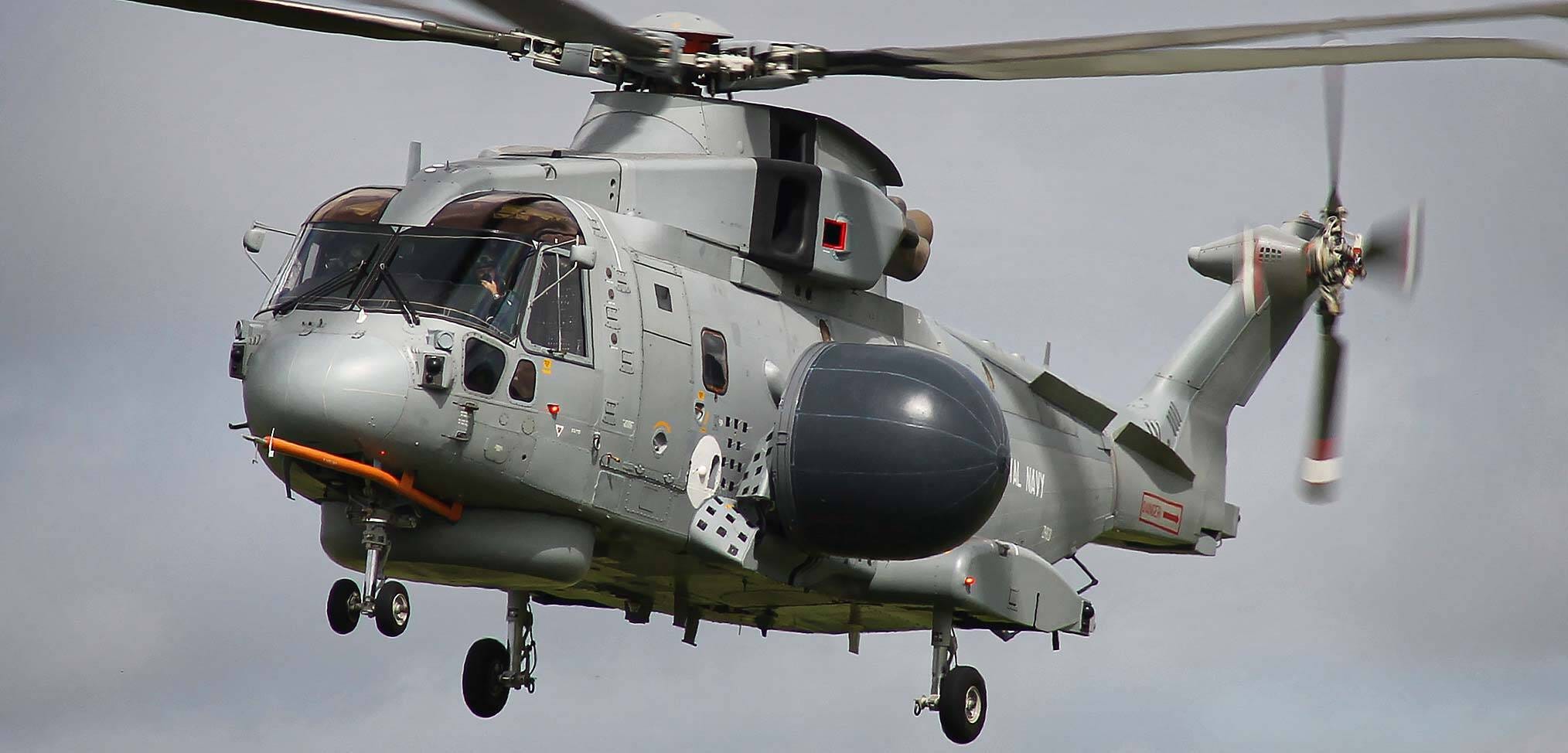
Going off an MoD press release, a Royal Navy Merlin airborne surveillance and control helicopter has arrived in Cyprus to boost the defence of UK military forces. The Merlin Mk2 helicopter, aircrews and an engineering team from 820 Naval Air Squadron, left Royal Naval Air Station Culdrose on Saturday and arrived at RAF Akrotiri in Cyprus this week.
With its powerful radar and mission system, the ASaC Merlin - known as Crowsnest - provides a defence against aerial threats. With a crew of three, the aircraft can fly up to a mile in height and look ‘over the horizon’ – giving advance warning of incoming drones or missiles. The Merlin will join Wildcat helicopters from 815 Naval Air Squadron, which were transported to RAF Akrotiri by an RAF C-17 transporter to bolster air defences, specifically against the drone threat.
This is in response to a Shahed drone attack on 2nd March which caused minor damage to a hangar at the RAF Akrotiri air base. No one was injured. Another two drones were intercepted by British Typhoon and F-35 aircraft which were scrambled from the base later that day.
The problem here is that the Merlin is quite an expensive beast and costs in the region of £15k an hour to operate (according to the MoD in 2019). Probably closer to £20k at todays prices. Meanwhile the F35B is said to cost up to £40k an hour to operate.
While everyone is keen to cut bureaucracy from the MoD, it seems to me that much of the waste comes from the lack of a cost effective counter drone system. Thanks to one low cost drone attack on an RAF base, we’re now committed to spending millions on unplanned operations for an indeterminate duration. Moreover, swatting cheap drones out of the sky seems like an abysmal use of F35 and Merlin airframe hours. This is not what they’re for.
To my mind, this is a task that could be done just as well by turboprops such as the A29. Embraer and Valkyrie Aero are expanding the A-29 Super Tucano’s counter-drone package with an AI-enabled system designed to speed up detection-to-engagement decision-making in manned counter-unmanned aerial system (C-UAS) missions.
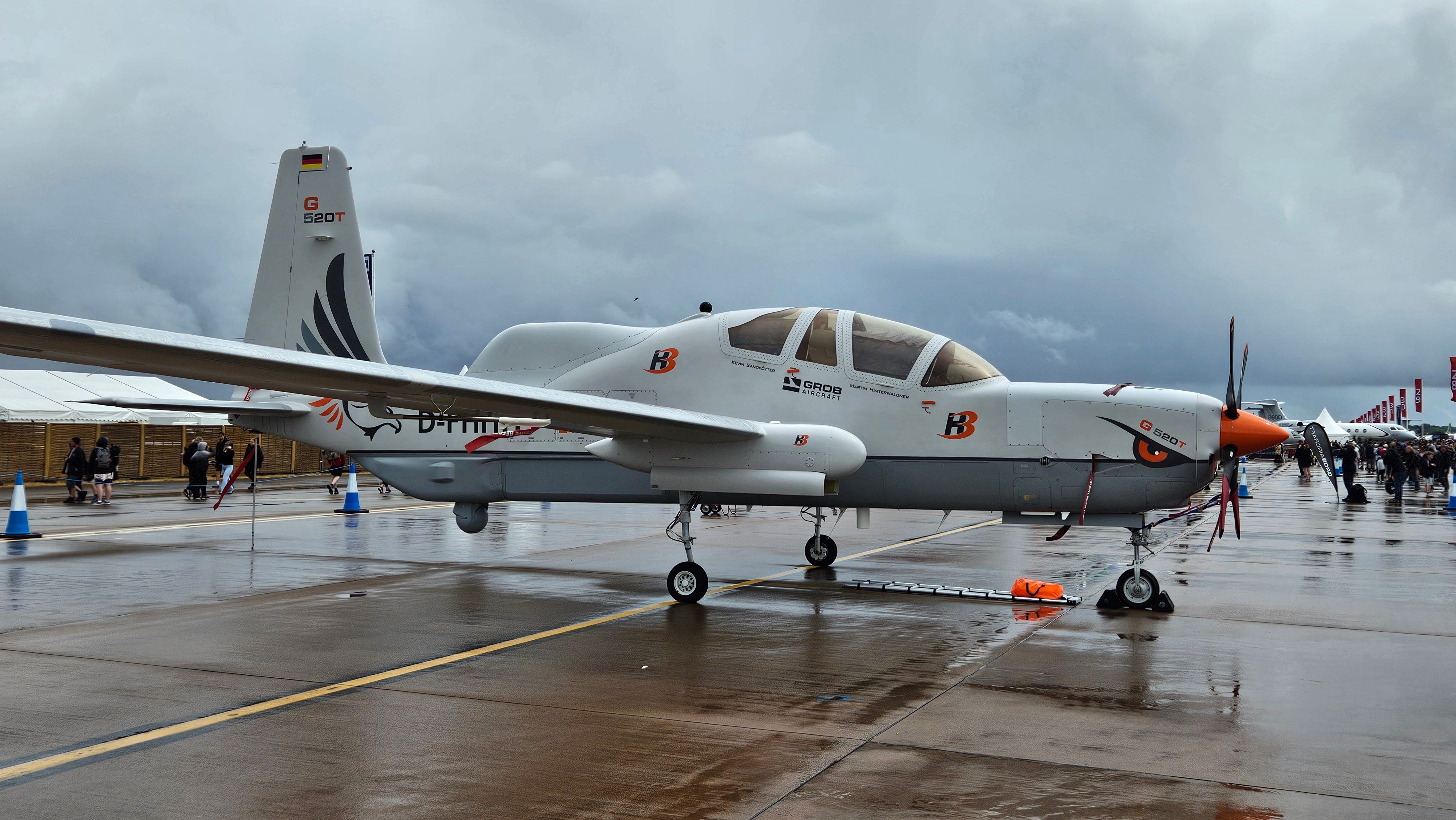
An an estimated £1200 per flight hour, and a loiter time of up to eight hours depending on weapons and fuel load, it seems like a no-brainer to me. Of course, there are other possible solutions, perhaps even taking on the role of Crowsnest. I recall being rather taken by the Grob G520 at RIAT last year (pictured below), not least for being the ugliest aeroplane I’ve ever seen, even making the Fairey Gannet look quite a handsome bird. I see a lot of potential in it.
Some suggest this isn’t necessarily the way to go, but I keep in mind that all wars are economic wars on some level, and in asymmetric warfare, a favoured enemy tactic is to make wars too expensive to fight (as was the case with Afghanistan). I’m not sufficiently up on the latest unmanned counter-drone systems, but I am absolutely sure that committing premium manned assets to this task is insane, especially when Akrotiri could be protected by a Phalanx CIWS system (£8.56 million per unit for the UK).
Whatever the cost of additional counter-drone technologies, it’s ultimately a saving if it means we’re not depleting airframe hours on some of the most expensive combat aircraft in existence, for which we have no immediate replacements. This latest incident shows just how far behind the curve Britain is in the drone wars. It’s all very well saying we have the technology to swat them, but a handful of F35s can’t fight off waves of swarm attacks, and we’ll run out of money long before our enemies run out of drones.
Not fit for purpose, comes to mind.
Hey, I enjoyed the Fairy Gannet and had some great adventures, although when it went totally quiet, flying slowly at 600 feet, was not my best day.
The Fairy Gannet AS.4 was quite good looking and lovely to fly.
Our Top Brass are renowned for always fighting the last war and too ready to adopt a gung-ho attitude that it is better to use our forces or we might lose them in defence cuts.
Well our 'head in the clouds' Top Brass have presided over two failures - first entering wars with the wrong kit and second getting involved in pointless wars albeit this second point was driven by politicians.