

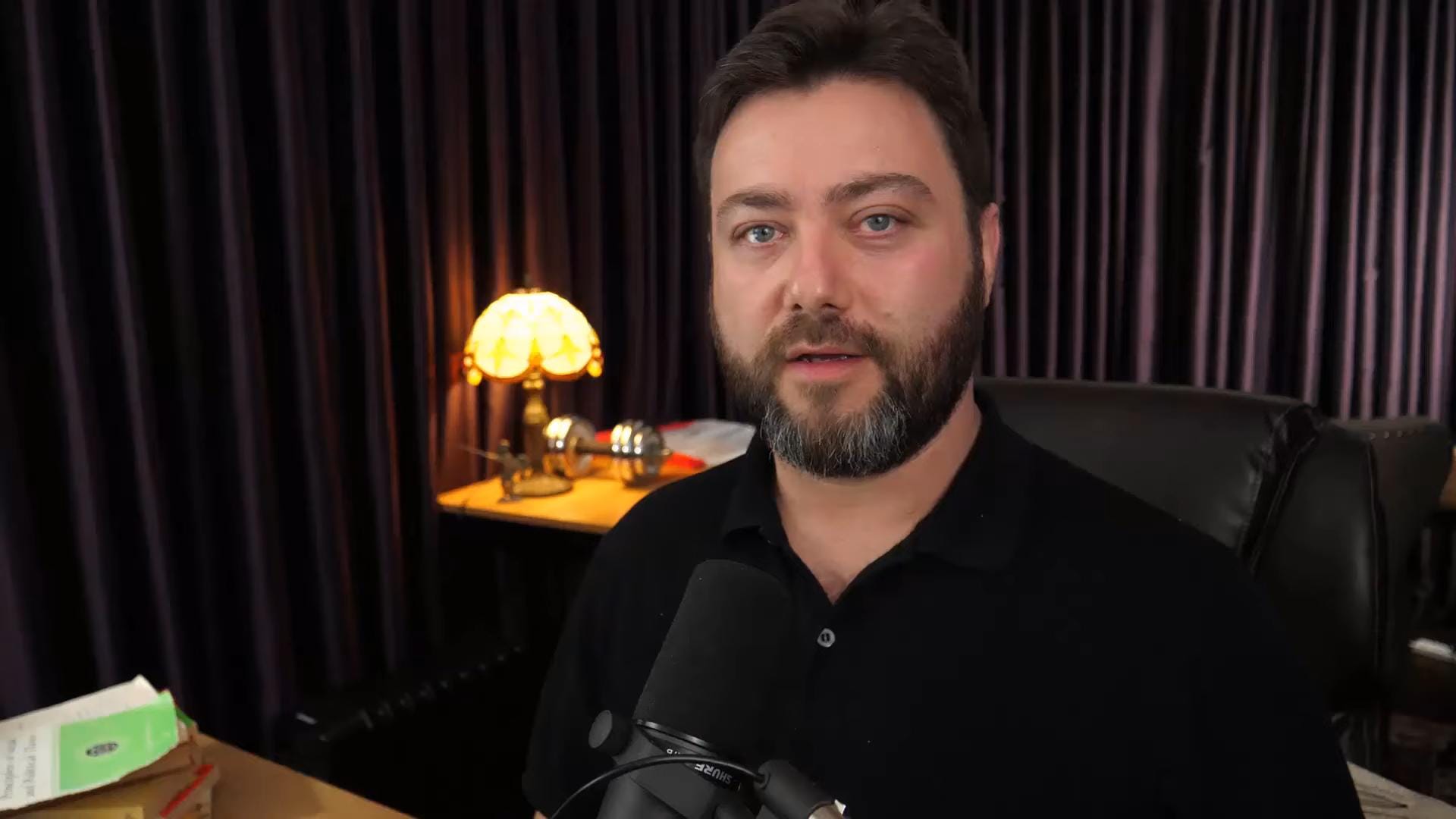
I’m often accused of not being very diplomatic, but you’ve no idea how much restraint I place on myself. For instance, I’ve politely pretended that Carl Benjamin isn’t a prat for quite a long time now (though I struggle to recall why).
Earlier on X I remarked that:
I don’t think it’s wise to take voters for fools, but that’s what the populist right does. You can rattle off a load of lazy populist pledges to please the crowd, but if you believe that the wider public won’t notice that it’s vacuous nonsense then you’re insulting their intelligence.
You don’t have to be a policy analyst to spot the holes in these tropes. You just have to apply a little bit of critical thinking, and it’s wrong to assume that people don’t. People will hear your ideas and measure them against their own experience, and these are the people who do the jobs that keep the country going while you’re all pontificating on X.
I noted this the other day when I saw Rupert Lowe blathering about free hospital parking. Having risen to the giddy heights of parking allocations administrator in my early career as a SQL DBA, I could immediately spot the flaws in that plan.
Now there are two possibilities here. Either I’m just “sperging out” over trivia (as some have suggested), or that the are millions of voters who have more of an idea how things actually work in the real world than a millionaire businessman, and they know when they’re being fobbed off with slop.
Both is possible, I suppose. But my question to Downes, Pitt and Lowe, is why take the gamble? Can you afford to lose those people? If I’m wrong then I’m wrong, but if I’m right, then we all have a problem don’t we? Supposing I am right, it would not take much time or effort to up your game and start taking this seriously, and there is no downside to it. As such, why would you not invest in that insurance?
We’re then treated to an intervention from Carl Benjamin.
You come across as unconstructive with your criticisms. I'm sure lots of people, myself included, would like to hear constructive criticism, but you frame all of your takes as if you're an enemy, so whether they are valid or not goes unheard.
Here I’m having major Brexit flashbacks from when I suggested Brexiteers should have some sort of plan. It was met with similar incredulity. But nonetheless, I replied.
Right, so you just don't like my tone. But you know I'm not wrong. You're not a fool. I mean, which of my points do you actually dispute? Do you dispute that parties should have policies rather than blurting out brainfarts on X? Do you dispute that political parties should have a solid (published) philosophical definition? Do you dispute that a party's policy platform should be more than the sum of the leader's tweets? Do you not think it matters to attend to basics like a presentable website?
Do you dispute that some thought should go into the operational viability of policies? Do you disagree that some thought should be given to unintended consequences? Do you disagree that policy is essential to building a reputation for seriousness? Do you think it doesn't matter if the lack of preparation and coordination leads to party spokesmen contradicting each other and themselves? Don't you think it's important not to walk into obvious ambushes?
Do you not think the leader of Restore should be held to the same standards he demanded of Reform? Do you think the wider public will be as easily fobbed off with lightweight bullet point slop as you are? Are you willing to gamble to future of the country on a party whose entire ethos is "it'll do for now?". What exactly am I wrong about?
And if I'm not wrong, and it's just my tone that the problem, why are you (with all your abundant charm) not using your platform to make the same points? After all, you want Restore to succeed right?
But actually, most of my criticism is constructive. I am identifying obvious problems, the same problems I identified in Reform early on (which I was 100% vindicated on). I even went to the trouble of setting out a basic sketch of what a coherent organisation should look like (manifestoproject.org) - based on Restore's website template - which took two months to produce, costing a mere £1800, while Restore sat on its arse for eight months and produced fuck all.
That, in conjunction with my detailed Substack critiques, I simply do not know how I could have made more of a contribution. So, basically, you're saying it's exclusively my tone, which in your view is an acceptable reason to completely disregard what I say.
Well here's the problem. I'm not special. I'm not a unique talent with particular insight. I'm just a guy asking very basic questions about the viability and seriousness of your party. I might be the first one to be asking these questions, but I won't be the only one. The problem only gets worse from here. The time to address it was six months ago, but a good time would be now.
To which Benjamin replies:
I'm not even reading it at this point, man, as I suspect most aren't. I can't understand why you come across as so venomous. Posting things on social media is just part of modern political campaigning, no need to take them like pronouncements from God. Restore are slowly cranking out half decent policy papers, so why get worked up about tweets?
There's actually very good answer to that question, but since he’s not going to read it, and he’s not interested in saving his party from making avoidable errors, there's no point in me answering it on X. But I will answer it here.
Let’s take the first premise. “Posting things on social media is just part of modern political campaigning, no need to take them like pronouncements from God”.
While tweets are not pronouncements from God, they are pronouncements from the party leader, and as such they carry weight. If they were credible, based on actual policy research, and could withstand even cursory critical analysis, then it wouldn’t be much of a problem. But that’s clearly not the case. Lowe is churning out low-effort populist slop that simply will not translate into the real world, and it won’t be taken seriously.
This matters for a number of reasons. Firstly, as I outlined in my original post, ordinary people know when they’re being fobbed off with lazy slop and it is a mistake to assume they won’t notice. And when you build your platform on lazy slop, you eventually have to account for it. If memory serves, Farage has had to disavow his own manifestos at least three times - the most recent example being Reform’s “Contract with the people” which wasn’t much of a contract after all.
This kind of slop ends up being a PR nightmare when party spokesmen can’t remember their own polices because they only exist in tweet form. Robert Jenrick came a cropper the other day, once again contradicting his own party, while a GB News presenter was holding him to what was in the now abandoned “Contract with the People” because there’s nothing else for journalists to go on.
The other problem with empty policy pledges is that they very often don’t make sense because they’re not born of any serious thinking. Very often they’re completely meaningless. This stuff may play well to the gallery, but on some level you still have to convince opinion influencers that you are serious and that you know what you’re doing. It’s all part of building your own credibility. Defence is one such issue, where there are any number of ex-servicemen who want to see a level of sophistication. Same can be said of energy policy.
This is just from the PR end of things, but then you get into the mechanics of actually governing. One of they key reason the Tories imploded was their inability to get anything done - and all of that stems form the fact that the policy cupboard was bare in 2019. They made all of the pleasing noises about a bonfire of quangos, a bonfire of regulation, and a British Bill of Rights, and then nothing happened. And there’s a reason for that.
It turns out that if you do the analysis, most quangos do actually serve a function. Our rules and regulations are what distinguish us from a third world country. A first world country requires extensive governance. We have things like the Food Standards Agency, the Air Accident Investigation Branch, the Arts Council and the Nuclear Decommissioning Authority for a reason. The right’s war on quangos is all predicated on the presumption that they do nothing of value, and that somehow they would be more efficient were they amalgamated into the kind of sprawling ministries we had back in the 1980s.
Then on the matter of deregulation, it turns out also that a lot of regulation does actually serve a function even if it’s bad regulation, and it turns out that unpicking it all was a lot harder than anybody assumed. I’m not saying there isn’t scope for deregulation but it has to be done carefully on a sector by sector basis, and you have to have a clue what you’re doing. There are good reasons why we didn’t simply bin EU retained regulations.
On the matter of a British Bill of Rights, it was again assumed this would be a walk in the park, but as it happens, you’re then getting into the politics of unpicking the Human Rights Act, and there’s all the subsequent debates about what should go into it, how it would function, and whether it would even be worth the hassle. It wouldn’t put a stop to lawfare. But nobody did that kind of thinking so it was quietly dropped when they realised what a headache it really was, and that they didn’t have the time or the political capital to do it.
If the Tories had put any serious thought into what they were going to do with power, they might have got a lot more done. If they’d put serious thought into the second order consequences of what they were talking about, they perhaps might not have made such idiotic pledges in the first place.
This is particularly what steers my thinking ECHR withdrawal. Before Britain submits its letter of intent to the Council of Europe, it will necessarily have to sound out the respective parties in Northern Ireland about alternatives they will agree to in order to keep the GFA in good order.
Being that this is Northern Ireland we’re talking about, one or more of the parties will play the fly in the ointment to see what political concessions they can get. They’re not going to agree to anything, and if the British government chooses to unilaterally modify the agreements then the whole NI settlement implodes.
Consequently, when we should have a government getting on with things, the whole show is once again derailed by the politics of Northern Ireland - chewing up all of its bandwidth. And again, I have to ask, what’s the point? As we know, the central problem is with British judges, the Human Rights Act and the supine nature of the Home Office. The clamour to leave the ECHR is the product of sloppy reporting.
I can see a lot of ways this goes south, not least because there is no majority support for leaving the ECHR, and any future right wing government will not enjoy a solid mandate. Perhaps not even a functioning parliamentary majority. As such, a party must measure what it would like to do against what it can actually get away with in the face of opposition from the blob, charities, the law profession, the unions, academia, the civil service and about half of the electorate.
If I was going to attempt anything close to this, I would want some sort of plan. Without a plan, I see any future right wing government not being able to deliver on what it promised, and abandoning its dafter “policies”. U-turn after u-turn. It will be Trussed in its first year - screwing things up so badly that it doesn’t get re-elected, and with that goes the hope of deporting all the people we want to get rid of.
No doubt you can tweet your way to Number Ten, but staying in Number Ten is a whole other ballgame. Having made huge undeliverable promises, and having delivered nothing except a constitutional crisis and a trade war, no party of the right is ever getting elected ever again.
There are plenty of reasons why basic attention to detail matters. Had there been some sort of Brexit plan, anticipating the problems of Northern Ireland, we would perhaps not now be tied to the Windsor Framework, effectively neutering Brexit. Had the Tories given some thought to what they were going to do in office, they might have kept their eighty seat majority and Starmer would not now be Prime Minister.
Moreover, it all matters because there is no point in budling an identical personality cult clone of Reform. Rupert Lowe departed Reform on acrimonious terms, slamming the party for its lack of seriousness, and the lack of a plan. In a blistering attack on Reform, Lowe concluded “I simply cannot endorse a party that has put so frighteningly little thought into what it would actually do with power”.
In doing so, he set down a marker that any subsequent organisation run by Rupert Lowe would be of a higher standard. So far, notwithstanding a padded out deportations paper from Harrison Pitt (which supporters use as a figleaf), Restore has proven to be more of the same lazy populist slop.
What makes me so “venomous” is that I’ve seen this play out before. I don't believe in throwing good money after bad. When I've already watched three castles built on sand collapse into the sea, I'm not pitching in to build another.
From the small stuff to the big stuff (hospital parking to ECHR withdrawal), credibility matters. Most of Reform’s PR disasters (and the implosion of the Tory party) could have been avoided by investing early on in policy research, and coordinating their messaging around a plan.
By setting down an intellectual foundation and a coherent agenda, Reform would look like a serious party by now - but everything is done on a just-in-time basis, with an it’ll do for now mentality. Reform hasn’t produced a single subject expert, and even its own supporters don’t think it will make for a viable government. The problem is, when you look at Reform and Restore side by side, I’m hard pressed to tell the difference. Carl Benjamin may not care about that, but I do.
Excellent.
There's a difference between diagnosis and treatment. The right have been decent at the former and utterly awful at the latter.
I must admit that I used to be pretty gung ho at the idea of leaving the ECHR but your blog, uncomfortable though it can be at times, has swung me away from that absolutist position.
We need something more pragmatic from the right that will appeal to ordinary people who feel that the country's gone wrong even if they can't properly articulate it.
shots. fired.