

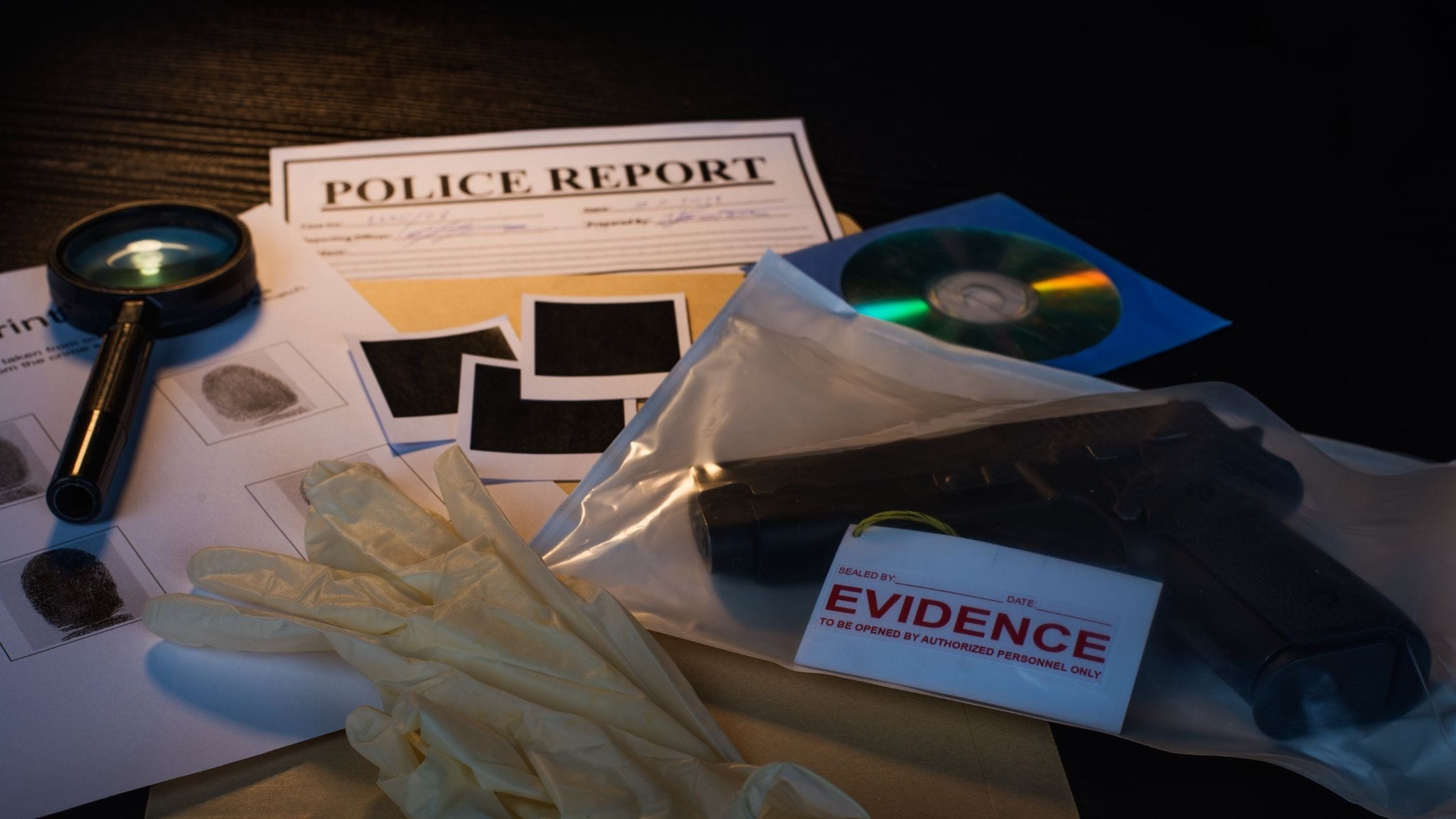
Continuing my recent theme of administrative collapse, I’ve just been looking at a BBC report from last year, noting that thousands of criminal cases - including some of the most serious violent and sexual offences - are collapsing every year because of lost, damaged or missing evidence.
More than 30,000 prosecutions in England and Wales collapsed between October 2020 and September 2024, data from the Crown Prosecution Service (CPS) reveals. They include 70 homicides and more than 550 sexual offences. Police chiefs say not all the cases relate to lost evidence and the figures include situations where officers may not be able to find an expert witness or get a medical statement.
However, it follows a series of damning reports about how police forces are storing evidence. A Home Office spokesperson said: “We always expect forces to adhere to the National Police Chiefs’ Council’s (NPCC) guidance on storage and retention of evidence.”
A leading criminologist says the increase was largely “a resourcing issue” brought about by cuts to police forces throughout the 2010s. And ex-police officers told the BBC it was unsurprising and the amount of evidence they deal with is “overwhelming”. In 2020, a total of 7,484 prosecutions collapsed because of lost, missing or damaged evidence. In 2024, that had risen by 9%, to 8,180.
A Peel Solutions blog posts unpacks some of the reasons for this. To understand why this is happening, we must look beyond individual errors and examine the immense pressures on the entire evidence management ecosystem. Several converging factors have created a perfect storm, stretching police resources and capabilities to their limit.
The Legacy of Decentralisation
Many experts trace the origins of the current crisis back to the 2012 closure of the national Forensic Science Service. This decision decentralised evidence storage and management, shifting the responsibility onto individual police forces. As Professor Carole McCartney of the University of Leicester notes, this left a fragmented landscape where forces, often with insufficient resources and infrastructure, were left to manage an increasingly complex and high-stakes task. What was once a national standard became a postcode lottery of capability.
The Digital Deluge
The single greatest operational challenge in modern investigations is the exponential growth of digital evidence. The volume of data from body-worn video, CCTV, smartphones, and computers has created a tsunami of information that forces are struggling to manage.
A 2022 report from His Majesty’s Inspectorate of Constabulary and Fire & Rescue Services (HMICFRS) presciently warned that police forces were failing to meet the demands of the digital age. This is not just a storage issue; it is a challenge of capture, analysis, and timely retrieval. When a single investigation can generate terabytes of data, the risk of a critical piece of footage being lost, overlooked, or becoming inaccessible increases dramatically.
Resource and Infrastructure Gaps
The strain of managing this evidence is compounded by years of budget constraints and ageing infrastructure. The widely publicised 2023 Casey Review, which exposed the Metropolitan Police’s use of “over-stuffed, broken freezers” to store forensic samples from rape cases, is a visceral example of this reality. When basic storage facilities are not fit for purpose, the integrity of the most sensitive evidence is immediately at risk. This lack of investment creates a vicious cycle where forces are constantly reacting to failures rather than proactively building resilient systems.
More Than Just “Lost” Evidence: A Question of Definition?
While the narrative of “lost evidence” is powerful, some police forces argue it doesn’t capture the full picture. The Crown Prosecution Service (CPS) data is categorised under a code (E72) that refers to evidence being “missing or unavailable.”
Forces like Northamptonshire Police have pointed out that this category is broader than just police error. It can also include instances where a key witness decides not to attend court or a crucial expert medical report is not available in time. From this perspective, the issue is one of wider “evidential difficulties” in which the police are just one component. While this context is important for a nuanced understanding, it does not diminish the core finding that the systems for gathering, storing, and presenting reliable evidence are frequently failing.
The piece concludes that the revelation that thousands of police cases are collapsing is not an indictment of individual officers but a clear signal of a system straining under the weight of historical decisions, chronic under-investment, and the unprecedented demands of the digital age. Effective and reliable evidence management is not a back-office administrative task; it is the bedrock of legitimate law enforcement and the functioning of the criminal justice system.
There’s not much I can add to this, save to say it is another data point in the slow motion collapse of technical civic governance, where again the narrative of civil service bloat just doesn’t hold water. If anything, we need more back office administrators and police evidence controllers to take the workload off frontline police officers who are already bogged down with admin when they’re not arresting me for posting memes on X.
Were it that this was one problem in isolation, it would be bad enough but coupled with the backlog in the court system, coupled with the near collapse of the prison service, we are sliding towards third world levels of dysfunctionality.
Of particular interest is the increasing volumes of digital data, particularly as more crime moves online, potentially necessitating a dedicated police evidence data centre, necessarily requiring expensive data forensics people and data administrators. This is far beyond the skillset and intelligence of the average plod.
While the Slop Right might complain about the costs of back office administration, they are the first to complain of the consequences when criminals get away with murder. Whether or not you believe the civil service is too big, the one thing that’s clear is that there aren’t nearly enough of them where we actually need them.
I do appreciate what you do here, Pete.
Hands up, I've been one to criticise and demand double headed axes through the departments of government. Partially through frustration, but partly, as your research shows, though ignorance.
I have no idea what the solution is other than a slow, long march through the institutions.
The irony eh?
Keep up the good work and the enlightenment.
Pete are you aiming to single handedly replace the entire Select Committee system? You’re not doing badly!