

In producing my defence policy for Manifesto Project, one thing I tried desperately hard not to do was to fall down a defence punditry rabbit hole. I totally failed. I’ve now been completely absorbed in all things defence for the last few days.
To be fair, it is an endlessly fascinating area of policy, and one that is highly consequential on several fronts. It’s also more interesting than the Westminster soap opera.
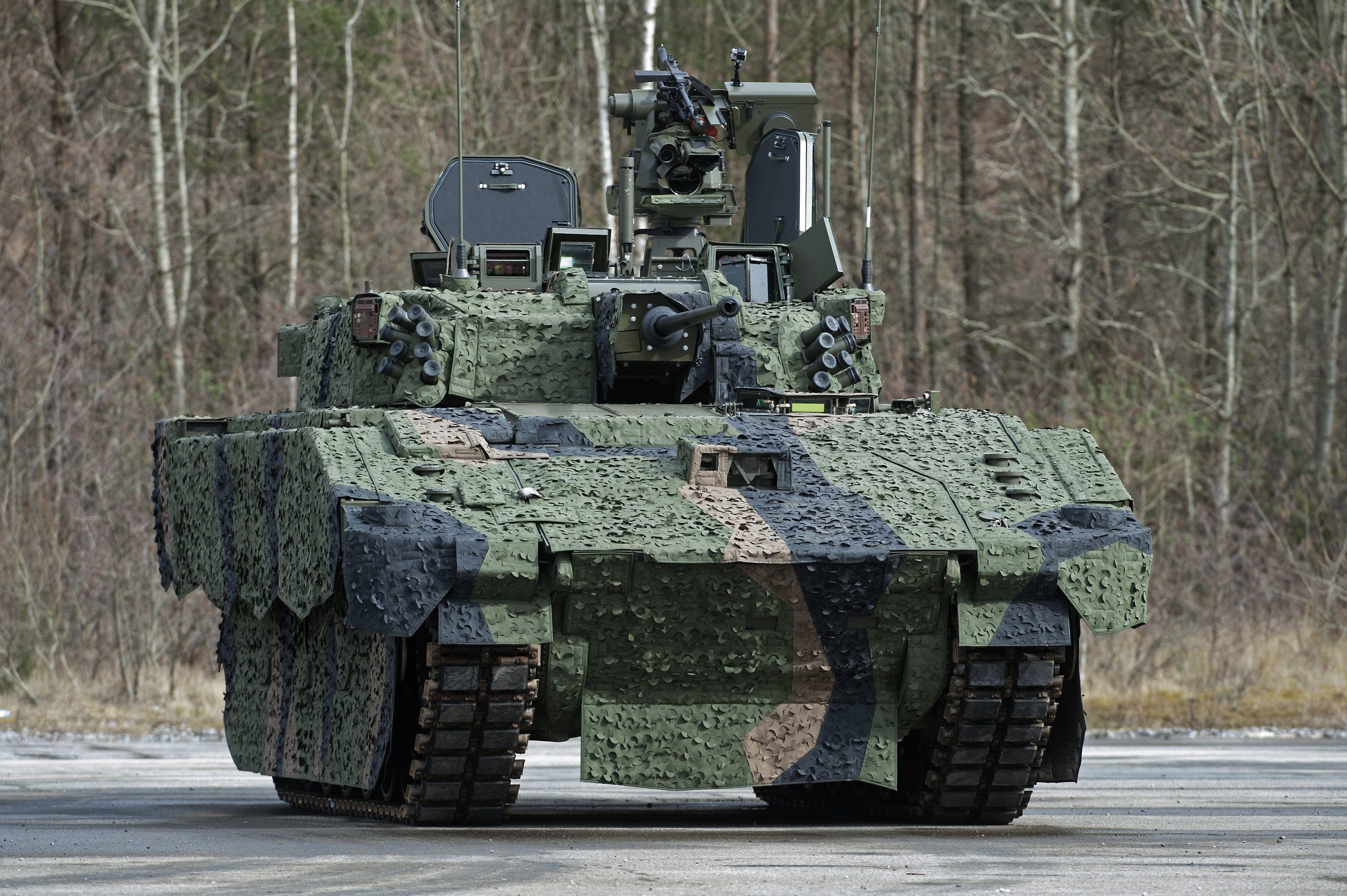
Here I find the lines can very easily blur between defence policy and land warfare doctrine or tactics. But there’s a reason for this. Individual decisions about the order of battle can be intensely political, not least the Ajax debacle when so much taxpayer’s money is at stake - and when, if we are forced to fight a war, we want to win it. It is necessary, then, to understand the thinking that brought us to a state where we’re lumbered with a white elephant that doesn’t work.
Ajax, it seems, is a classic example of muddled and conflicting specifications based on an obsolete concept, and the defence bureaucracy simply cannot keep pace with the rate of change. That, though, not altogether surprising. I don’t think there has ever been a situation quite like this where tactics and technologies are changing every other week.
The temptation is to believe that Britain is uniquely awful when it comes to expensive failures, but this kind of debacle goes with the territory. It is an inherent facet of bureaucracy the world over, and it’s especially acute in defence. Germany has had similar problems. To expect defence contractors to take a design brief for something that’s never been tried before, and deliver it on time and on budget is too much to ask.
One thing you notice about new generation combat vehicles is the extent to which they are overburdened by complex and expensive technology, and electronics systems that will be next to impossible to service in the field. While any defence doctrine does better if the directive is to keep it simple, designing a vehicle or weapons system capable of surviving on the modern battlefield is going to be inherently complex. There are always trade-offs.
The iron law of fighting vehicles is that you can’t have something that is complex, reliable and cheap. The Ajax debacle is nothing at all new under the sun. Expensive and embarrassing failures are the norm.
On that basis, it is usually the case that decision makers have to just pick something and stick with it, not only to save face, but also to ensure we’re not left with nothing at all. Nearly every big ticket item pressed into service has to undergo a refinement process for the first ten years at least, and in some cases, there is never a settled variant. By the end of their service no two Gloster Meteors were alike. Experimentation is integral to warfare.
But then, as we have come to learn, sometimes it is better to suffer a capability gap than to be lumbered with something that will never work, that will hoover up all of your defence budget. I suppose the trick is knowing when to cut your losses and pull the plug.
That’s certainly the case when you’re close to the razor’s edge when mistakes can be fatal. When under imminent threat of invasion, you do not have the luxury of procrastination - which is why Estonia has cancelled its €500M combat vehicle purchase to boost drone defence. The decision to cancel its significant CV90 replacement programme comes in the wake of wayward strike drones entering its airspace, and that is informing the decision.
This is the dilemma for all NATO forces now, who are invested in big ticket items like Challenger 3, Ajax, Boxer, Puma and Apache. Letting go is hard to do. But they must. Challenger 3 in my view is one of those things that should not go ahead. We have 148 on order, but if even half of that number (which is already far too few) are ever combat ready I’ll be astonished.
Because we’re so heavily invested in them, though, defence pundits have reinvented the MBT as a command node for use with fantasy unmanned formations - when the accompanying unspecified vehicles for mass formations don’t exist, and if they do, will last all of about four minutes in drone swarm country.
The same excuses, meanwhile are being made for the Apache, reinvented as a “mission management nexus” when the writing is already on the wall. Attack choppers are increasingly useless drone fodder we cannot afford.
This, in my view, is why defence doctrine level decisions are political, and policy documents are the right place for this kind of discussion. Generals can get too attached to their toys and someone needs to step in and make unsentimental choices. That’s the business of politics. We cannot allow our defence doctrine to be shaped by (and around) relics of the Cold War because their mistakes will get us all killed.
Put simply, set-piece armoured thrusts are an obsolete concept. When both sides are producing anti-tank missiles at relatively low cost, sending tanks into face prepared positions is completely pointless. Light anti-tank infantry has become the mainstay of current thinking even in the ranks of the British army. One thing generals on both sides of the Ukraine war are scratching their heads over is what Putin plans to do with the tanks he’s amassing. They simply are not useful to him except as a very short-lived diversion.
One of the lessons we can learn from the war in Ukraine is that tank-on-tank engagement are actually quite rare, and the biggest threat to tanks is mines, drones and guided artillery. If the objective is to deny a peer enemy the opportunity to take territory then overwatch battlefield surveillance paired with precision artillery is where the investment must go. Not for nothing is the Ukraine war characterised as WW1 with drones. Armoured thrusts are the equivalent of sending men over the top to be massacred by heavy guns. Not something you can do when you have critical manpower shortages.
Retaking territory, then is much more involved. We have to configure and equip forces to dominate the transparent battlefield, achieve local superiority in drones (ISR + loitering munitions) and electronic warfare to blind the defender’s sensors and strike assets, and extend the “kill zone” and interdict logistics, command nodes, and reserves deep behind the lines with long-range precision systems. The two basic pillars are as follows:
Suppress and attrit. Use precision artillery, rocket systems, and massed cheap drones to degrade the defender’s artillery, air defences, and forward positions. This creates temporary local windows where enemy fires are neutralised or greatly reduced.
Conduct limited, supported ground actions. Exploit the windows with dispersed small units rather than massed formations. Infantry advances under drone overwatch, supported by robotic systems for mine breaching and initial assaults. Protected vehicles (tanks and IFVs) are used judiciously for mobile protected firepower where conditions allow, not as the main effort. Success comes through successive limited objectives rather than one decisive breakthrough.
As such, if there is a role for tanks they need to be agile, fast, and expendable. Not 70 tonne £20m-a-pop behemoths, and IFVs must have serious firepower - which neither Boxer nor Ajax have. The best armour protection they can have is an artillery and drone screen.
The lesson from Ukraine is unambiguous: the era of heavy, expensive, and slow-to-adapt platforms as the centrepiece of land power is over. If we are serious about both deterring aggression and retaining the ability to retake territory, then defence policy must stop trying to prop up relics of the last century and instead make the hard political choices that align spending with the battlefield as it actually exists.
That means ruthlessly cutting programmes that cannot be made relevant quickly, and redirecting resources at scale into mass attritable drones, precision munitions, electronic warfare, and lighter, faster, more expendable ground systems. The alternative is to keep pouring money into systems that will be neutralised before they ever reach the fight and to discover, too late, that sunk-cost white elephants costs far more than money.
I have very much enjoyed your foray into defence policy and strategy. You make a great deal of sense. Unfortunately with procurement, once initiated there are too many with vested interests and ministers are too ignorant of their brief to say no.
In essence the MOD and Top Brass haven't moved on from the Cold War 1945 to 1991 and are stuck in the past and slow to move on. Ajax and Jackel 3 typify this problem.