

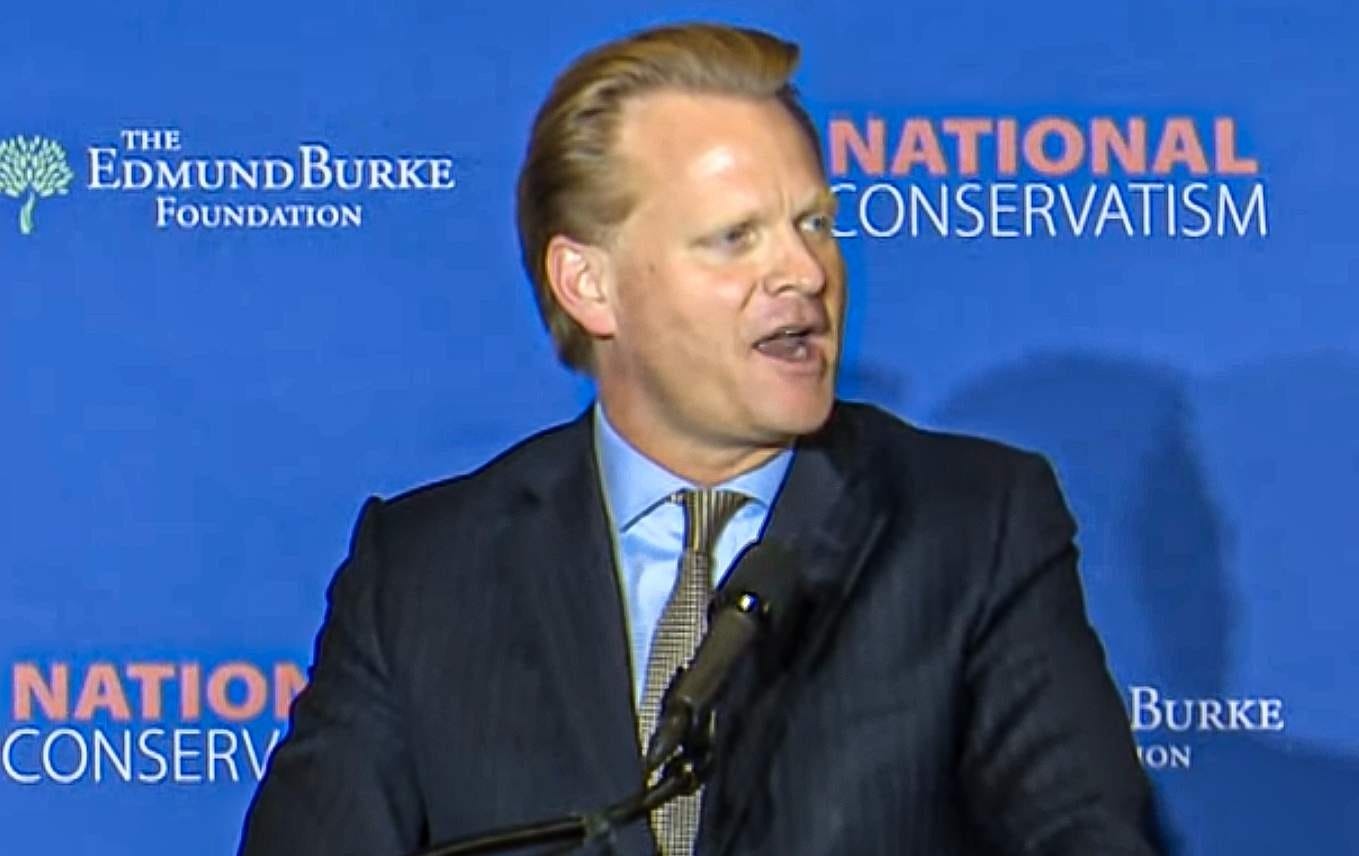
Behind the news of Farage appointing his shadow cabinet, we learn that James Orr is the party’s new policy director. This is potentially a game changer for Reform. If anyone can bring substance to Reform, it is he.
As I understand it, he’s quite central to the National Conservatism organisation, which draws its approaches from some properly defined principles - the very same ones I adapted for the Manifesto Project. His publicly stated attitudes are very much in line with what the right actually wants, and if he is allowed to create intellectual architecture for Reform, then it has an outside chance of becoming a serious party.
That, of course, is with the caveat that only so much can be done with such a trainwreck of a party leader known for scrubbing policy on a whim. It could very easily cause a man of principle to resign. Moreover, there is no point in producing policy is the party itself does not know how to us it (as we’re now seeing with Restore).
My reservation, as with all of the populist right, is that ideology is not tempered by pragmatism. Anyone can dream up policy blueprints, but conservative daydreams do not constitute an implementation plan. Once you start thinking in that third dimension, it puts a different spin on what is actually achievable.
Without doing that kind of work, parties are prone to making big but unrealisable promises, thereby taking the electorate for a ride again. There are plenty of measures that sound good in theory but fall over on delivery, especially in the face of institutional opposition. Whether Orr is serious enough to offset the clownshow of Farage, Tice and Braverman also remains to be seen.
That said, it’s never a good sign if an individual is endorsed by The Spectator, who seem quite impressed with him. This being the vessel that foisted Johnson, Cummings and Birbalsingh upon us. the people they hold up to be towering intellects usually turn out to be hacks.
In my view the populist right will get nowhere near fixing the problems because they have no interest in finding out what the problems actually are. When it comes to policy, they’ll do what they always do. They’ll pick one of their bulletpoint tropes (the same ones they’ve been recycling for forty years) and get one of their dogsbody juniors to write a “policy”.
This won’t be policy research though. It will be a post-facto justification for what they already believe, and their “research” base will be all the Tory think tank crapola which approaches policy writing in the exact same way (a lot like how academia works). Everything is recycled and regurgitated. Policy is written by the 25-30something wonk who’s never had a real job outside of politics, and no direct experience of what they speak.
This is how the right wing blob has operated for all of time, and there’s not real sign of change. It’s actually part of a broader reputation laundering system, again a lot like academia. It’s quite a coup if you can get an MP to put their name to it. The aim of this exercise is not to produce policy, but to affirm the mantras of your political patrons. This is why you don’t get informed or workable policy out of the Westminster machine.
This is what contributes to the rightwing mythos that the civil service are unduly obstructive (another right wing trope). While it’s true that the upper echelons of the civil service are comprised of a certain Oxford PPE liberal ilk, much of the obstruction is civil servants doing their job, telling ministers that their half-baked policies simply do not conform to any known version reality. Arrogant ministers are known for barking orders at civil servants, expecting them to implement measures that actually have the opposite of the intended effect.
As such, as so many ex ministers report, virtually everything is a negotiation with the civil service, and it’s why incompetent ministers who don’t have good research or access to primary expertise have civil servants running rings around them. This has been especially true in health, where so many Tories are taken up the role with a head full of Daily Mail inspired tropes, only to find that the system doesn’t work as they always assumed it did. This is why ministers always end up blaming the civil service for their failure to achieve anythign when they’re on office.
This then perpetuates the cycle where we have crap politicians working from crap research, accomplishing nothing, blaming the civil service, then scurrying away to write their next crappy paper on reforming the civil service (of which there are dozens, dating back forty years).
This is something the Johnson administration thought they get around by sacking top expert civil servants and replacing them with special advisers of their own choosing. That, though, created a whole tier of nepo-jobs for the 25-30something think tanks juniors (former interns) who’ve been kicking around Westminster since their late teens. Civil servants are quite effective at freezing them out or bamboozling them with process. Contrary to rightwing trope, not all top civil servants are lanyard wearing wokies. Thinking back to Ivan Rogers, some of them are ruthlessly competent.
What makes this worse is that the right loves big sweeping gestures that conform to small government dogma. The job of policymakers is either to either to identify the (actual) problems and fix them, or to propose alternative models and plan their implementation. The right, though, likes to wield the axe instead, sabotaging the few bits of the system that actually work. Either that or we get yet another top-down reorganisation, ensuring that the system is always in a state of transition.
If, though, you’re actually any good at policy, you tend to find that the known problems are symptomatic of something else, usually a bottleneck, which can be resolved with surgical interventions. Certainly in the case of the NHS, the hospital backlog is more to do with the dysfunctional GP system, and the chaotic care system - yet most of the attention is focussed on recognising hospitals all the time. That’s what happens when you work on assumptions and tropes rather than starting from first bases.
This is why I don’t hold out much hope for Reform/Restore etc, because they look to the same small clan of wonks, luminaries and ex ministers for input, terrified to arrive at a different conclusion, because if they do, they have to go up against their own base who’ve been spoonfed the same basic tropes for decades - all of which is informed by sloppy tabloid reporting.
With persistence, you can eventually get them to admit they do need policy, and then late in the day they will commission a glossy PDF report, but then it goes into the filing cabinet and nobody at the top of the party will bother to read it, much less let it inform what they say. A policy paper is considered successful if it gets your name in the limelight for forty eight hours, and then the subject lies dormant til the next hack commissions another one on the same subject (which says exactly the same). The slop cycle repeats.
This is exacerbated when all the daydreaming goes into what they might like to do, as opposed to what they actually can do in office (given all the obstacles), which results in a crapola policy prospectus they simply can’t deliver, and are then kicked out of office for achieving very little.
This is how we got to the point where the public thinks the uniparty are all the same and start gravitating to new populist parties on the right who promise they can change everything, and that it’s all really quick and simple to do. That’s how you get Restore/Reform/Advance and the likes - popular because they’re unburdened with a track record of failure. What makes them disastrous is that they’re not pushing these tombola tropes because they’re cynical. They actually believe their own horseshit. Their tropes become articles of faith.
This is why there is then such hostility to any suggestion that they might want to actually think. The tropes are set in stone, and only a heretic would challenge them. As such, nobody sane even bothers to go against the grain (especially when conformity is so lucrative) - and it’s why politics doesn’t attract serious people.
That then is how you get the self-perpetuating reality gap between the public and the political class. Populists believe they are the antidote, but they’re just as much a part of the system. The party names and faces may change, but the luminaries and wonks behind them don’t, and all the incentives are stacked against producing worthwhile policy - to the extent that very few peope in politics even recognise what real policy looks like.
Well argued as always Pete. I think we all agree that signing James Orr is a transfer window coup if he’s allowed to get the job done. Can’t disagree with all the failures of policy and moreso execution of policy (the hard bit) since Blair. Blair did shit stuff to us but his execution was par excellence.
I see this a bit different. The old answer to “How do you eat an elephant?” Answer “with a teaspoon.” The danger is being overwhelmed into trying to do too much. There’s only three things to get done in a first term and do these right and a second term becomes possible.
1. Immigration. Withdraw all benefits for all illegals and anyone here without ILTR. Extend ILTR to 10 years starting from the Boriswave. Deport criminals, illegals, and withdrawal of benefits should lead to remigration.
2. Cheaper energy. Reopen North Sea for oil and gas. Crack on with SMNRs to supply local energy. This will take time but let’s bust Mad Ed’s story about our oil being priced on the market spot prices. It doesn’t have to be that way.
3. Get Britain working again with sensible withdrawal of benefits for the workshy. Slash benefits including the triple lock. We’re all in this together.
God knows where to start with the NHS but you can’t do everything on Day1.
Pete, you've assessed many of the problems well but maybe you haven't ever worked with the civil service. One of the problems is that its members work to totally different priorities than those, outside the service, who are attempting to make things happen. I learned that lesson the hard way when faced with obstruction after obstruction but did learn how to make a small amount of progress.
Maybe the main problem is that ministers don't spend enough time in the civil service environment, to learn how best to make some progress.